Enemies historically against Guardian Council
Since the Persian Constitution Revolution emphasized not only fighting domestic despotism, but also foreign colonialism, foreign enemies were forced to react against the movement innate to which was the idea of clerical oversight on the laws passed by the Majlis.
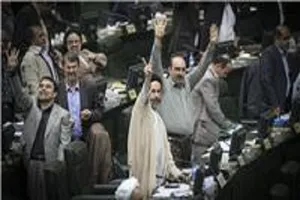
Landmark legislation opens way for Iranian government to implement JCPOA
The Iranian parliament (Majlis) on Tuesday passed a bill on the implementation of the Joint Comprehensive Plan of Action (JCPOA). This will open the way for the government to try cooperation with the group 5+1 (the US, UK, France, Russia, China, and Germany) which is aimed at trust building with the world powers through limiting the country’s nuclear program in return for the removal of international sanctions.
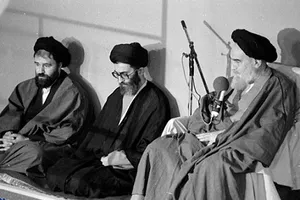
A summary of Ayatollah Khamanei’s 8 years of jihadi management as president
The eight years of Ayatollah Ali Khamenei’s presidency was a period for the management of the war and economic isolation along with the important process of building and shaping organizations for the Islamic Republic. He had on agenda the tasks of making and coordinating organizations under the shadow of war and a fight against anti-revolutionaries and the Monafeqin and liberals at a time when in the foreign relations sphere there was a need to introduce the Revolution and the positions of the country in the face of measures taken against Iran by enemies.
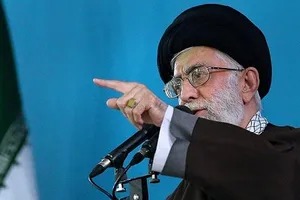
Reviewing 8 back-downs by foreign countries after Supreme Leader’s warnings
Following the Islamic Revolution, the West tried to be a hurdle against the progress of the Islamic Republic of Iran. Therefore, it tried in different occasions such as the Mykonos restaurant assassinations, military threats in the nuclear case, attempt to restrict Iran’s missile power, etc. to weaken Iran. But since all these attempts failed in the face of Supreme Leader Ayatollah Ali Khamenei’s staunch positions, the West has always failed to meet its goals.

How the United States has historically failed in culturally infiltrating Iran
One of the old concerns of Supreme Leader Ayatollah Ali Khamenei is cultural assault and infiltration by the enemies. Lately also the Leader in part of his speech with the commanders of the IRGC said “Of course economic and security infiltration is dangerous and has serious aftermaths. But the enemy’s cultural infiltration is much more dangerous and all have to be careful about it.”
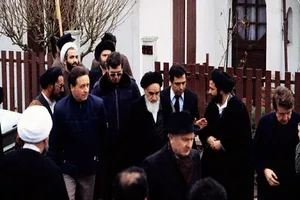
A review of domestic, foreign reactions to Imam Khomeini’s departure for Paris
The US ambassador to Iran believed Sharif Emami made a mistake that more than any other of his mistakes contained lack of realism and sound judgment. He believed that since Imam Khomeini’s presence in the religious city of Najaf was as pain in the Shah’s neck, if he was removed from that city it would damage the plans of Imam Khomeini’s followers. He believed that since Imam Khomeini would make contact with Iranian pilgrims in Iraq and give them his tape records, he if was removed from the area it would make him less accessible to followers.
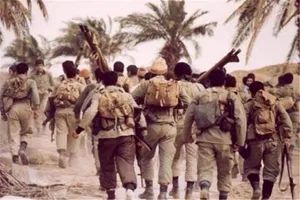
Examples of “relying on domestic capabilities” during Sacred Defense
countries had quite different situations. On one side there was Iran which after the fall of the Shah would see itself free of the rein of domestic and foreign rule and had no relations with world powers. On the other side was Iraq with its reliance on the US and which had started the attack with Western-made weapons.
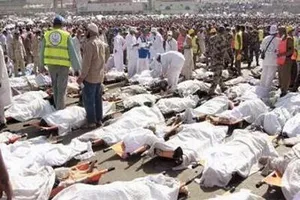
An overview of House of Saud’s 11 Hajj mismanagement disasters
After the crane crash in Mecca this year which led to the death and injury of hundreds of pilgrims of the House of God, there were numerous speculations about the incident and its causes. At last, the issue was closed by putting the blame on sand storm and the demonstrations were ended. Creating excuses for this managerial scandal had not subsided yet when another bitter incident, on the day of the Eid al-Adha once again put Muslims in mourning suit. But this time again, Saudi officials cited natural factors such as the heat, the large number of the pilgrims, and lack of order among the pilgrims as the main causes counting for the incident in their helpless effort to find excuses. Despite these, historical records indicate that there have been numerous instances of Saudi mismanagement in holding the Hajj ritual. In many such cases, such as the slaughter of Iranian pilgrims in 1988, it is evident that the event has been quite willful.
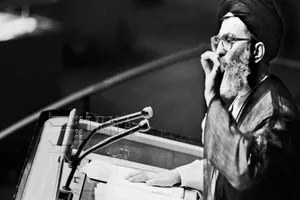
UK admits US humiliated by Ayatollah Khamenei in UN
Ayatollah Khamenei’s speech was delivered in the most critical years of the imposed war, during a time when a large campaign led by the United States was directed at the Islamic republic. Nonstop support behind the Saddam regime continued after Resolution 598 and there was a heavy media barrage against the Islamic Republic in Western media.
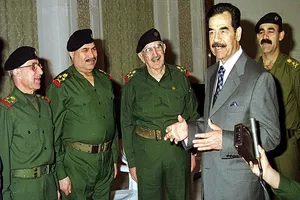
80countries that equipped Saddam against Iran
When in September 1979 Iraq invaded Iran, the two countries’ situations were completely different from each other. As the war started, Iran was deprived of any sort of foreign support, but on the other hand the Ba’ath regime of Iraq entered the war with full international backing and various Western and Arab countries would give him radars and defense systems as well as the latest equipment.