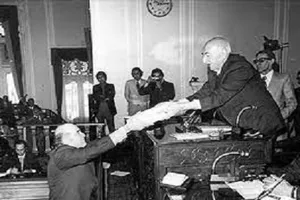
A Look at the Situation of the Judiciary During the Pahlavi Regime
Many historians and experts believe that in the Pahlavi regime the judiciary was almost completely integrated into the executive branch. Judicial decisions reflected the will of the government. In addition, the scope of the judiciary was gradually limited by the expansion of military courts and special civilian courts. Thus, under the rule of both Reza Shah and Mohammad Reza Shah, the legal system of the country was based on the premise that the government is not wrong. The process of the judiciary in the Pahlavi regime made judges and lawyers one of the first groups to express their dissatisfaction with the regime in 1977, so that the majority of them joined the wave of revolution in 1978.
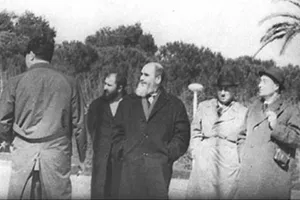
The Failure of the Pahlavi Regime to Confront Imam Khomeini During the Years of Exile
On October 5, 1965, Imam Khomeini was sent from Turkey to the second exile, Iraq. With the establishment of the Imam in Najaf, a new chapter of the struggle against the Pahlavi regime began. In return, the regime sought a royal show of strength to crack down more strongly on the activities of the Imam and his followers. The first attempt to do so was the occupation and looting of the Faizieh school in Qom. The attack on the Imam's house in Qom and its inspection was another reaction of the regime. In another move, the regime arrested and deported several Imam's tuition officials. But these measures had no effect on the process of struggle. The regime was forced to deport the Imam to a country like India in order to distance him from the people. The spread of this rumor provoked such a strong reaction among the people and the fighting forces that the regime stopped carrying it out.
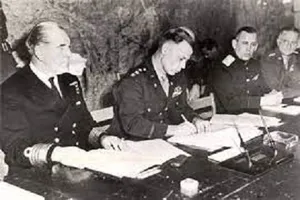
Historical analysis of capitulation
Leaving these events behind, we come to the eventful year of 1964 and the issue of capitulation, the re-arrest and deportation of Haj Agha Ruhollah, which overshadowed the events after this year and the way of struggle.
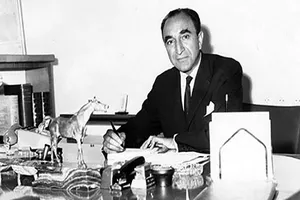
Assadullah Alam was Aware of the Weak Foundations of the Shah's Government
On October 26, 1963, the cabinet of Amirasdollah Alam received a vote of confidence from the National Assembly. Alam had formed a cabinet on July 19, 1962, one day after the dismissal of Dr. Ali Amini by the Shah.
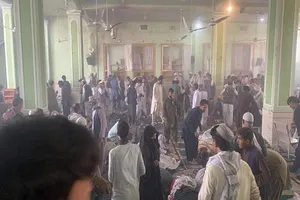
An overview of Terrorist Crimes in Friday Prayers
On Friday, October 15, 2021, during the Friday prayer, a huge explosion took place in the largest Shiite mosque in the city of Kandahar in southern Afghanistan, as a result of which dozens of people were martyred and injured. The crime committed by terrorist groups in Friday prayers has been repeated before; In Iran in the 1980s, a group of hypocrites committed crimes several times with numerous explosions during Friday prayers. Ayatollah Seyyed Mohammad Baqir Hakim martyred in terrorist attack in Iraq after Friday prayers. Sheikh Morteza Zaid Al-Muhtoori was martyred in Yemen following an explosion. An explosion took place in Lebanon to assassinate Ayatollah Seyyed Mohammad Hussein Fazlullah, killing many people. In addition, in other Islamic countries, many worshipers were martyred following numerous explosions during Friday prayers.
An Overview of the Organization of Iranian People's Fedai Guerrillas “Fadaiyan-e-Khalq”
The People's Fedayeen Guerrilla Organization is one of the guerrilla groups in the late 1960s and 1970s that was able to carry out operations by recruiting passionate youth and make its name in the history of Iran's armed movements.
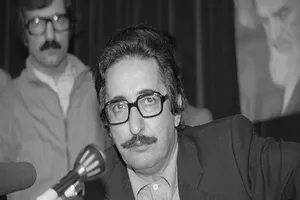
The Role of Bani Sadr in the Assassinations of the 80s
The media reports the death of Abul Hassan Bani Sadr; The first president of Iran after the victory of the revolution, whose fate was to be removed from the presidency and to flee the country. He created many tensions during his presidency, and with the cooperation of the hypocrites, he was involved in the assassination of prominent figures of the Islamic Republic in the 1980s. Hussein Nawab Safavi, one of the main liaisons between Bani Sadr and the hypocrites' organization, admitted after his arrest that in the internal negotiations, Bani Sadr had explicitly stated that "if we cannot mobilize the people, the system must be paralyzed and the leaders must be destroyed."
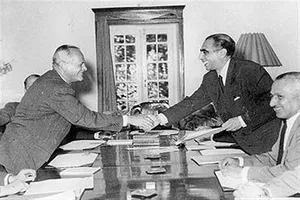
Seven Decades After the Consolidation of Iran's Oil in the Consortium
September 19, 1954, Ali Amini, Minister of Finance of the Zahedi Government, signed the text of the agreement with the International Oil Consortium. The contract was signed by Mohammad Reza Pahlavi on October 29, 1954, and the next day the first oil tanker belonging to a consortium of Western countries was loaded in Abadan, and a new era of foreign countries domination of Iran's economic resources and looting of great national wealth by the United States began. After the victory of the Islamic Revolution, Iranian oil was officially nationalized, but it was still the first and main point of contention between Iran and the United States. But during this period, the Islamic Republic not only mastered the mechanism of circumventing sanctions and making them ineffective, but also showed a brilliant record in implementing regional and supra-regional sanctions policies.
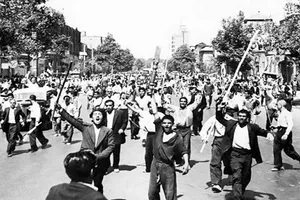
A historical review on terrible consequences of trusting the West
The contemporary history reflects that since the constitution, every path towards trusting the West has lead to destruction.
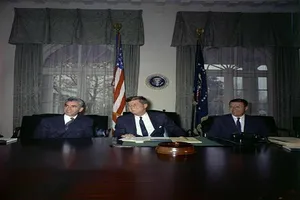
America's Dual Approach to the Iranian Nation about the Nuclear Issue
The United States was the first country to sign a nuclear deal with Iran during the Pahlavi regime. The first serious step in this field was taken in 1956. In 1967, a tripartite agreement was reached between Iran, the United States, and the International Atomic Energy Agency to delegate oversight, safety, and protection measures for the peaceful use of nuclear energy. In addition, in 1975, a cooperation agreement was signed between the Atomic Energy Organization of Iran and the US Department of Energy to train Iranian personnel in nuclear science and engineering in 13 articles. In 1976, five related contracts were concluded with the American company "General Atomic". It was in this direction that in October 1978, four laser beam production units were shipped to Iran so that with physical changes in these units, Iran could start enriching uranium.